

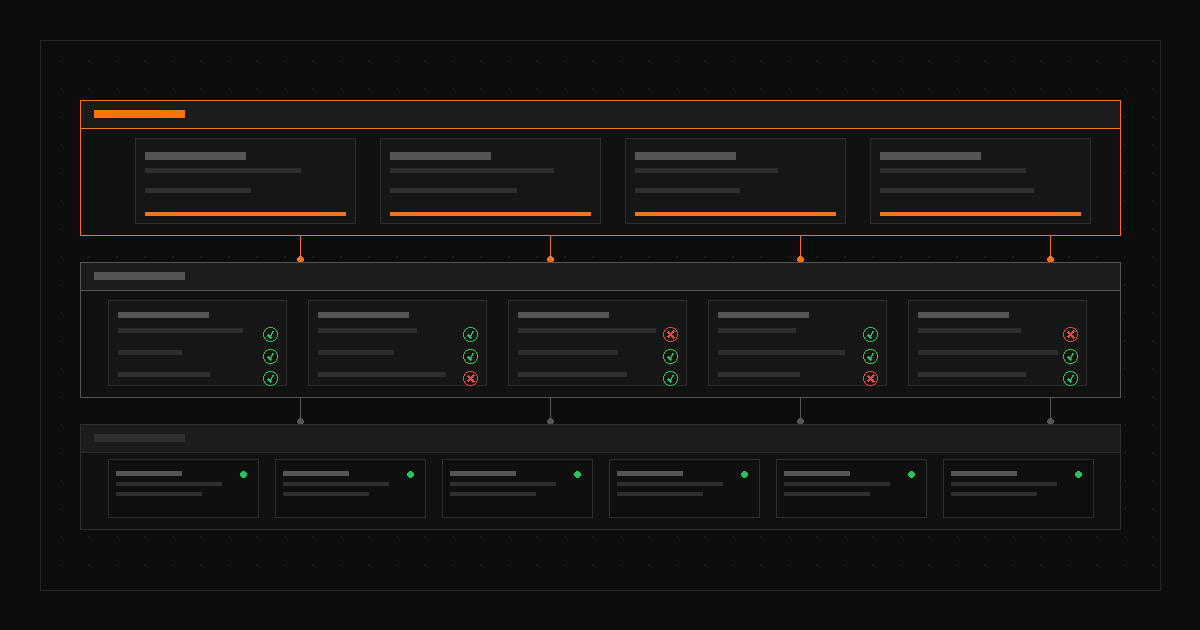
In regulated environments, the user experience cannot be separated from trust, permissions, risk, and auditability. Whether you are designing for healthcare operations or payments, the product has to help users move quickly while staying inside real constraints.
That is why compliance-aware design is a product skill, not a legal cleanup step.
Users trust products when the product behaves predictably. They know what will happen next. They know why information is being asked for. They know when something is final, reversible, or under review. They know the system is protecting the work instead of making it harder.
That means trust often comes from small things: clear states, strong labels, visible review steps, confidence-building language, permission-aware UI, and sensible defaults.
The domains are different, but the design challenges are similar. Both require clear workflows, reduced ambiguity, strong handling of exceptions, and a high bar for confidence. In healthcare, mistakes create operational and financial fallout. In fintech, they create financial and trust fallout. Either way, sloppy UX gets expensive fast.
I have worked on workflow products in healthcare revenue operations and PCI-conscious embedded payments. In both spaces, the strongest solutions came from embracing the constraints early. Access, auditability, risk, and edge cases were treated as core product inputs, not annoying blockers.
Bring design into compliance-heavy conversations earlier. Map the workflow with engineering and product before screens get polished. Design the review states. Design the handoffs. Design the fallback paths. That is how regulated products become both safer and easier to use.